
Retail executives often face a recurring question: should customer support remain fully in-house, or is nearshore outsourcing a smarter long-term strategy?
The answer isn’t binary. It depends on volume volatility, cost structure, and operational maturity.The Limitations of In-House-Only Models
In-house teams provide control, but they struggle with:
- Fixed labor costs during low-volume periods
- Hiring bottlenecks during peak seasons
- Attrition and burnout
- Rising wage pressure in U.S. labor markets
As interaction volumes grow across voice, chat, email, and social channels, these limitations become more pronounced.Why High-Volume Retailers Choose Nearshore
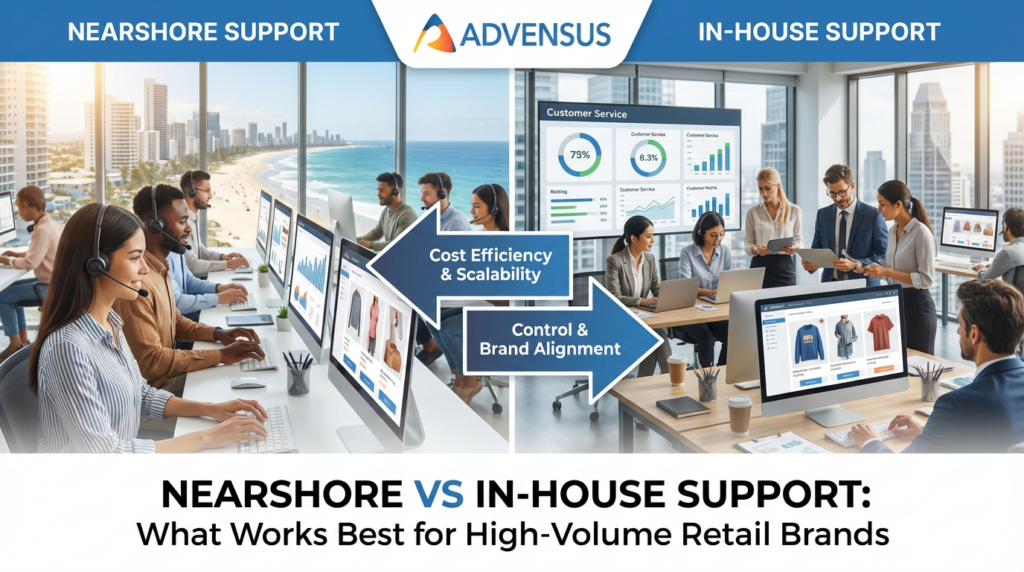
Nearshore support offers:
- Variable cost structures
- Faster scalability
- Lower attrition than offshore markets
- Better CX consistency due to cultural alignment
For many brands, the optimal model is hybrid: core functions in-house, volume-driven interactions nearshored.Risk Mitigation and Control
Modern nearshore models allow retailers to retain:
- QA ownership
- KPI governance
- Brand training and scripting control
Final Thought
High-volume retail operations require flexibility. Nearshore support isn’t about replacing internal teams — it’s about protecting them.
Soft CTA: Assess whether a hybrid support model could reduce cost and risk in your operation.