
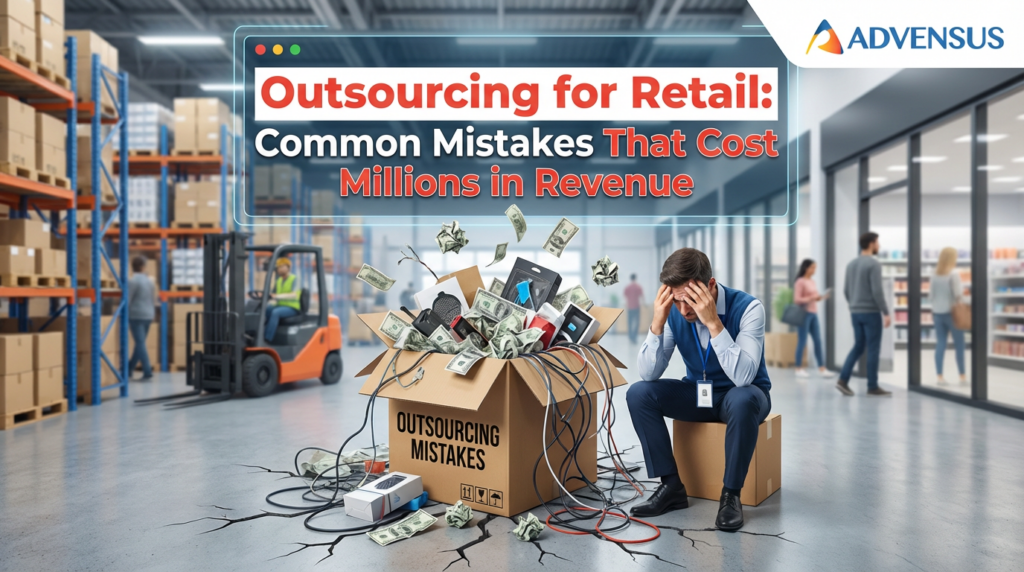
The retail sector operates on razor-thin margins and cyclical peaks, making outsourcing a necessary lever for managing costs and scale. However, for a VP of Operations or Customer Experience, the decision to outsource is not a simple procurement exercise. It is a strategic operational choice that directly impacts brand equity and Customer Lifetime Value (CLV). When outsourcing is treated merely as a cost-cutting shortcut, the financial damage—in the form of lost customers, increased recovery costs, and damaged loyalty—can far exceed the initial savings.
The real problem is the operational risk inherent in prioritizing the lowest bid. This approach compromises four foundational pillars of successful retail service delivery: cultural alignment, quality assurance (QA) ownership, training depth, and KPI consistency.The True Cost of a Low-Bid Vendor in Retail CX
Retail customer interactions are highly transactional, but the context behind them—returns, order modifications, loyalty program issues, high-stakes seasonal demand—requires agents who are brand-fluent, empathetic, and empowered to resolve issues quickly. A vendor chosen solely on an hourly rate will inevitably fail to meet these complex demands, leading to a cascade of negative financial consequences.1. Cultural Disconnect and Brand Erosion
Retail CX is an extension of the brand promise. A poor customer service interaction can instantly negate millions spent on marketing and merchandising.
- Operational Risk: A low-cost provider often recruits from a pool focused purely on transactional efficiency (low AHT) without adequate investment in cultural fit or brand immersion. This results in service that sounds generic, lacks empathy, and fails to handle nuanced or emotional customer issues.
- Business Impact (Risk & CX):
- Increased Dissatisfaction: Generic service drives down CSAT/NPS. In retail, a single low-NPS interaction directly correlates with a reduced likelihood of a repeat purchase.
- Higher Attrition: Customers are quick to defect. Losing a customer whose CLV is $5,000 to save $2/hour on an agent is an unsustainable financial equation.
- The Fix: Successful retailers prioritize a cultural affinity test in their vendor selection, looking for partners whose agent pool closely understands and can fluidly engage with the U.S./Canadian customer mindset and brand voice. This is a core reason why nearshore locations, such as the Dominican Republic and Trinidad & Tobago, with their strong cultural ties and high English proficiency (B2–C2), deliver better brand alignment than distant offshore models.
2. Lack of Ownership in Quality Assurance (QA)
Many low-cost outsourcing contracts push QA back onto the client, or implement a basic, checklist-driven QA process that measures compliance, not customer experience success.
- Operational Risk: In retail, QA must be dynamic, adapting to seasonal product launches, new promotions, and rapidly changing inventory policies. If the vendor lacks ownership or expertise, critical quality gaps—such as providing incorrect return instructions or failing to cross-sell appropriately—are missed.
- Realistic Scenario: During a holiday peak, a vendor’s QA team focuses only on confirming agents read a disclaimer (a compliance metric), while failing to monitor whether agents successfully de-escalated a shipping delay complaint (a CX metric). The result is compliant, yet brand-damaging, service.
- Business Impact (KPIs & Risk): Poor QA leads to:
- Increased Repeat Calls: Customers call back to resolve the issue the first agent failed to fix, raising AHT and lowering First Call Resolution (FCR).
- Higher Operational Cost: Every failed interaction generates a downstream cost, whether it’s a refund, a manual ticket to a Tier 2 team, or an additional labor hour spent on recovery.
3. Insufficient and Generic Training Documentation
Retail requires deep product knowledge and constant training updates. Low-price vendors often use inadequate, one-size-fits-all training modules to save on instructor-led time.
- Operational Risk: Agents are trained to handle common inquiries but not complex scenarios. They lack the context to handle situations like a multi-item return with different shipping methods or a loyalty account issue involving a third-party partner. When agents are unprepared, they default to scripts, frustrating the customer.
- Trade-off: A $40,000 saving on initial training investment can result in an ongoing 10% reduction in agent efficiency and a 15% drop in product-specific upselling/cross-selling success—a massive revenue leak.
- What Successful Retailers Do: They mandate that the BPO partner demonstrate a robust, co-developed training curriculum that includes product-specific modules, extensive soft skills training (empathy and de-escalation), and ongoing, real-time knowledge base management.
4. Misalignment of Key Performance Indicators (KPIs)
The classic outsourcing mistake is allowing the vendor to optimize for their profit (low AHT, high utilization) rather than the retailer’s success (FCR, CSAT, Sales Conversion Rate).
| Low-Cost Vendor Focus (Risk) | High-Value Partner Focus (Success) |
| Average Handle Time (AHT) | First Call Resolution (FCR) |
| Agent Utilization | Customer Satisfaction (CSAT/NPS) |
| Cost Per Minute | Revenue Per Contact / Sales Conversion |
- Operational Insight: When AHT is the primary KPI, agents rush calls, leading to incomplete resolutions and customer frustration. The vendor meets their metric, but the retailer pays the hidden cost in customer churn and recovery effort.
- Mitigation: The contract must clearly tie a portion of the vendor’s compensation to the retailer’s core business outcomes: revenue recovery, CSAT scores, or transactional success rates.
The Strategic Advantage of Nearshore Retail Support
For mid-market and enterprise retailers, the goal is not merely cheaper labor, but reduced operational friction and risk. This is where a quality-focused nearshore model proves its strategic value over distant offshore alternatives.
- Time Zone Alignment: Seamless operations with U.S. and Canadian headquarters (EST/AST/CST) eliminates the need for expensive, high-attrition graveyard shifts, ensuring leadership and training resources are available during peak hours.
- Cultural & Linguistic Fit: A BPO partner in the Dominican Republic or Trinidad & Tobago delivers agents with high English proficiency and a natural cultural familiarity with North American consumer behavior—a necessity for handling nuanced retail interactions, especially for specialized products or loyalty programs.
- Scalability for Peaks: Retail requires surge capacity for Black Friday, Cyber Monday, and seasonal sales. A flexible nearshore partner can activate skilled, pre-vetted talent faster and more reliably than models relying on volatile, distant labor pools. This capability reduces the risk of customer service backlogs that can cripple a quarter’s revenue.
Final Thought
An outsourcing decision based on minimizing the hourly rate is fundamentally a decision to transfer customer risk to your brand. The right outsourcing decision for retail is an investment in operational resilience and customer lifetime value protection.
Assess whether your current outsourcing strategy is built to weather peak season demand and protect your brand equity, or if it’s merely a fragile cost-saving tactic.