
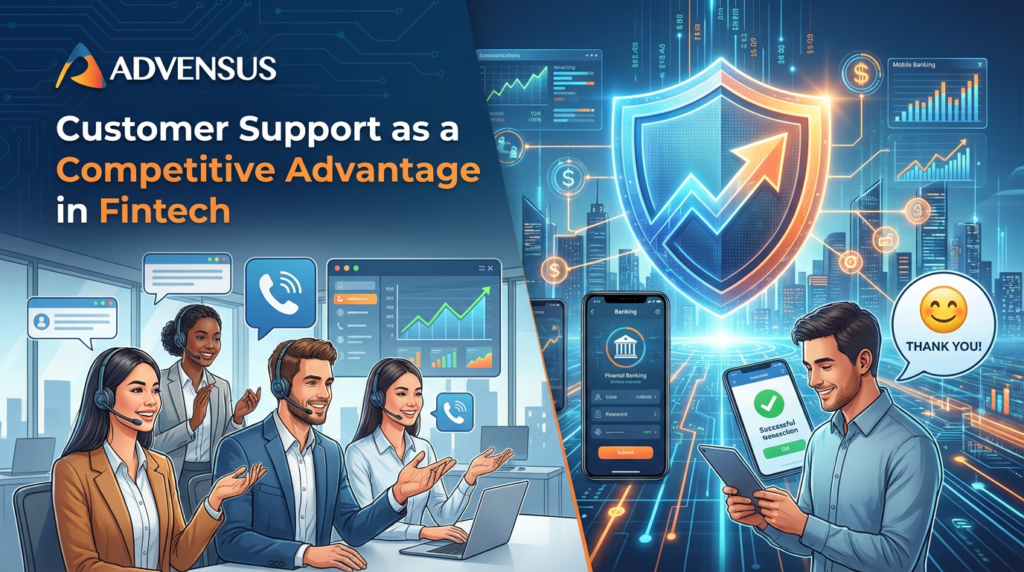
In the early days of fintech, the product was the differentiator. A slick UI, instant transfers, or lower fees were enough to win market share from traditional banks.
Today, those features are table stakes. Your competitors can replicate your feature set in weeks. What they cannot easily replicate is your Customer Experience (CX).
Yet, many fintech operations leaders still view support as a “cost to be contained.”
This is where most operations underestimate risk. In a crowded market, your support team is the only human connection a user has with your digital brand. If that connection fails, they switch apps in 30 seconds.
Where Fintech CX Breaks Down
The cracks usually appear when a fintech starts finding “product-market fit” and volumes explode.
- Long Wait Times: A customer panicking about a frozen account will not tolerate a 20-minute hold.
- Inconsistent Answers: One agent says “wait 24 hours,” another says “submit a ticket.” This kills trust.
- Poor Escalation Handling: Tier 1 agents lack the authority to solve complex financial issues, leading to an endless loop of frustration.
These aren’t just “support issues”; they are growth blockers.
Turning Support into Differentiation
High-performing fintechs treat support not as a utility, but as a retention engine.
1. Support as a Trust Signal When a bank branch is closed, your app is the bank. A knowledgeable, articulate agent who can explain why a transaction was flagged builds more trust than a marketing campaign ever could.
2. Support as a Product Feedback Loop Your support agents hear the complaints first. A strategic partner will aggregate this data to tell you why users are churning or what features are broken. If your BPO vendor isn’t giving you product insights, they are just processing tickets.
3. Support as a Revenue Driver Agents who solve problems quickly earn the right to cross-sell. A “support interaction” about a credit limit can easily become a conversion opportunity for a premium tier—if the agent is trained to spot it.
The Nearshore Scale Advantage
This is why nearshore teams are winning over traditional offshore models for fintech.
You need agents who understand the context of the American financial system—what a generic “overdraft” means to a rent payment. Dominican and Trinidadian agents, with their deep exposure to U.S. culture, bridge this gap naturally.
Evaluate whether your support experience differentiates or commoditizes your brand. If your support feels generic, your brand will feel generic.
Nearshore outsourcing allows you to extend your support coverag to 24/7 or handle volume spikes without inflating your costs or degrading your quality standards.
Conclusion
Your product gets them in the door. Your support keeps them there. Don’t let a “lowest bidder” outsourcing strategy undo the work your product team has built.
Assess whether your operation is built to scale.