
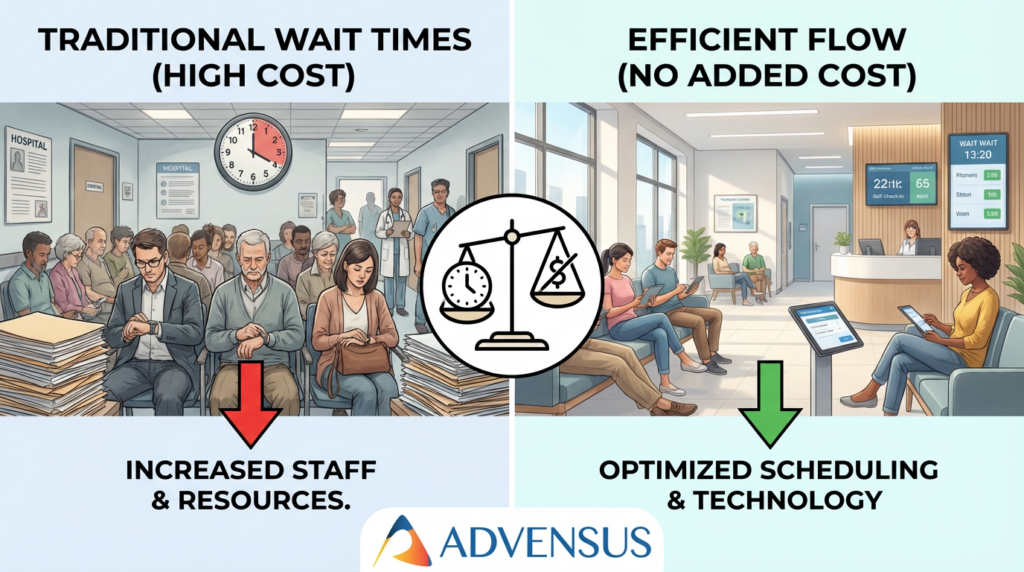
“Your call is important to us. Please continue to hold.” In healthcare, this message is toxic. Long wait times are one of the most common complaints in patient surveys, and they are almost entirely solvable.
This is the point where many teams lose visibility. Leaders assume wait times are a staffing problem (“we need more people”). Often, it’s a capacity management problem.
Where Wait Times Originate
- Understaffed Contact Centers: Relying solely on expensive in-house staff limits your ability to scale up during Monday morning surges.
- Poor Call Routing: Patients pressing “1” for appointments and getting routed to billing creates transfers and delays.
- Limited Hours: Breaking your arm at 6 PM on a Friday shouldn’t mean waiting until Monday for an answer.
Nearshore as a Capacity Solution
Nearshore teams allow providers to build a flexible capacity model:
- Overflow Support: Your in-house team handles the core volume. The nearshore team activates automatically when wait times hit 60 seconds.
- Extended Hours: Nearshore teams can cover evenings and weekends at a fraction of the cost of overtime for domestic staff.
- Consistent Service Levels: By determining a “blended” cost model, you can afford to have enough heads on the floor to answer 90% of calls in 30 seconds.
Identify where capacity constraints are hurting patient experience.
Conclusion
Patients measure quality of care starting from the moment they pick up the phone. If they can’t reach you, they can’t value you.