

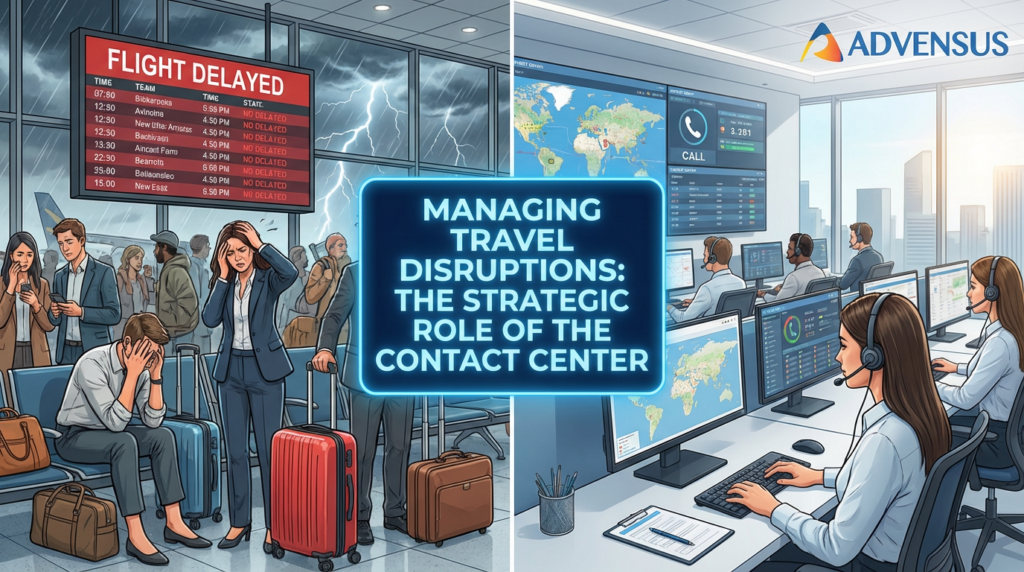
Disruptions are inevitable in travel. Weather, mechanical issues, and strikes happen. How a brand responds defines customer perception far more than the disruption itself. A delay is an annoyance; a lack of information is a betrayal.
Where Disruption Management Breaks Down
- Understaffed Support Teams: When 200 people need to rebook at once, a 5-person team gets overwhelmed instantly.
- Poor Escalation Protocols: Agents don’t know who has the authority to waive fees or authorize hotel vouchers.
- Inconsistent Messaging: The app says one thing, the gate agent says another, and the call center says a third.
Contact Centers as Crisis Command Centers
Well-structured contact centers enable:
- Fast Rerouting: Proactively rebooking passengers before they even call.
- Clear Communication: Pushing consistent updates across SMS, email, and voice channels.
- De-escalation: Trained agents who can handle frustrated travelers with empathy and solutions, turning a negative into a “saved” moment.
The Nearshore Advantage
Nearshore teams provide the scalability needed during weather events. You can have a “standby” team ready to surge online when a hurricane warning hits, ensuring you aren’t caught off guard.
Assess whether your contact center is built for disruption—or only for normal operations.