
How Proactive Support Reduces Cart Abandonment and Unlocks Hidden Revenue in Retail—–Executive-Level Introduction
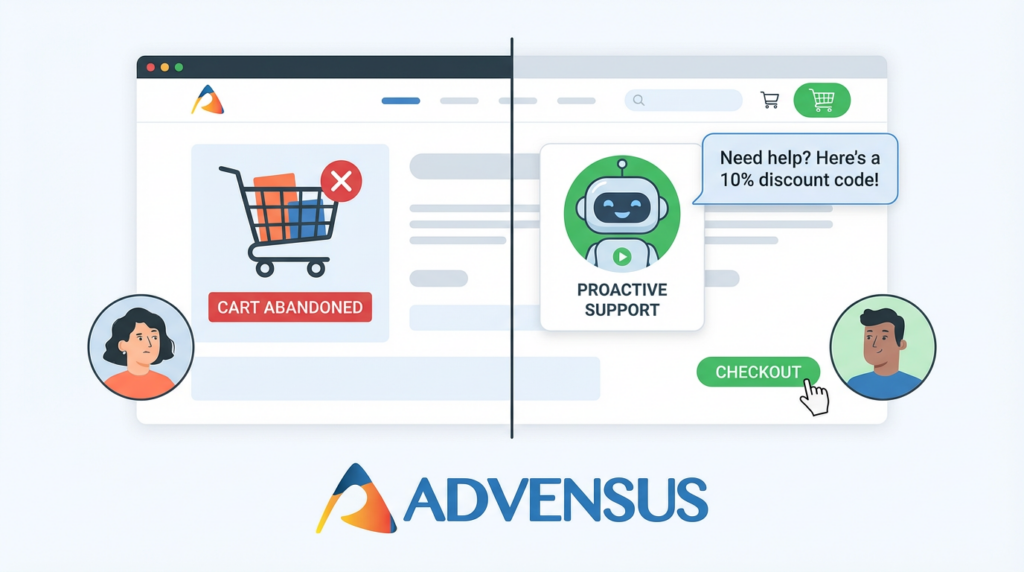
The industry average for e-commerce cart abandonment hovers near 70%. For operations and finance leaders, this metric is not just a marketing or UX issue; it is a critical, quantifiable failure in the customer journey that directly impacts quarterly revenue and profit margins. We often treat cart abandonment as a consequence of poor website design, but a significant portion is recoverable through strategic intervention at the moment of decision. The operational problem is simple: Your support model is reactive, waiting for a customer to call after they have failed, instead of proactively engaging them before they leave. The cost of a lost sale—multiplied across thousands of transactions—far outweighs the investment in an intelligent, preemptive support strategy.—–The Operational Cost of Reactive Cart Recovery
Retail operations often focus recovery efforts on post-abandonment tactics like email follow-ups and retargeting ads. While these have a place, they are inherently less effective and more expensive than real-time intervention. The longer the elapsed time between abandonment and recovery attempt, the lower the conversion rate, and the higher the marginal marketing cost.The Three Phases of Cart Abandonment Risk
To move from a reactive to a proactive model, VPs of Operations must first identify when a customer is transitioning from a shopper to an at-risk abandoner:
- The Information Block (Pre-Checkout): A customer hesitates due to an unknown: What is the return policy? What are the final shipping costs? Will this item fit? A reactive model forces them to hunt for an FAQ or a phone number, increasing friction.
- The Transactional Friction (Checkout Page): The customer is ready to pay but encounters a technical issue or confusion: The promo code won’t apply. The payment processor is rejecting the card. I need to change the shipping address. This is a high-intent, high-risk moment.
- The Post-Click Anxiety (Order Confirmation): While technically a sale, immediate post-purchase calls often relate to anxiety about delivery, order modifications, or buyer’s remorse. Proactive clarification here reduces inbound contacts and potential cancellations.
KPIs for Measuring Proactive Support Impact
Traditional support metrics (AHT, CSAT) are relevant, but proactive support introduces specific operational KPIs critical to revenue recovery:
| Operational Metric | Business Impact | Target Function |
| Proactive Chat Conversion Rate | Direct increase in recovered revenue | Measures effectiveness of agent intervention |
| Abandonment Reduction Rate (ARR) | Shows the direct operational impact on the funnel | Calculates the percentage of abandonment events that were prevented |
| First Contact Resolution (FCR) – Proactive | Reduces repeat high-cost contacts (calls/emails) | Measures agent’s ability to solve the issue instantly in chat |
| Net Transaction Score (NTS) | Correlates support interaction with purchase completion | A transactional-level CSAT for pre-purchase interactions |
—–Implementing Proactive Chat for Revenue Assurance
The most effective operational tool for cart recovery is intelligent, proactive chat deployed by a trained, empathetic support team. This is not bot deployment; it is strategic human intervention.Scenario: Clarifying Complex Orders
A customer is placing a high-value, configurable order (e.g., custom furniture, a computer build, or a complex subscription). They have spent 15 minutes on the final checkout page.
Reactive Response (The Failure): The customer abandons the cart, feeling overwhelmed by configuration options or confusion about an obscure warranty fee. They may return later, or they may simply purchase from a competitor with a clearer process.
Proactive Intervention (The Recovery): An agent initiates a contextual chat: “I see you’ve been reviewing the custom warranty options for the Model X. Can I quickly clarify the difference between the standard and extended coverage, or confirm your freight options to your region?”
This immediate, relevant intervention lowers anxiety, solves the roadblock, and is perceived as concierge service, converting a high-value, at-risk cart into a completed sale. The support cost is offset entirely by the recovered gross margin.Operational Trade-Offs: Proactive vs. Reactive Staffing
A common operational hurdle is the cost of staffing to handle “potential” contacts. Deploying a proactive strategy effectively requires an outsourcing partner that can absorb and manage the variable load, especially during high-volume retail periods (e.g., Black Friday, seasonal sales).
| Operational Model | Staffing Implication | Cost/Risk Profile |
| Reactive Only (Inbound) | Staffing based on historical contact volume; predictable but misses revenue. | Lower fixed cost, high opportunity cost (lost sales). |
| Proactive Hybrid (Outsourced Nearshore) | Flexible staffing model (Nearshore) for peak traffic/high-value intent triggers. | Higher initial investment, significantly lower cost of abandonment. |
—–The Strategic Advantage of Nearshore for Proactive Retail Support
Proactive support is highly time-sensitive. A three-hour delay in response is a guaranteed abandonment. This necessity makes the traditional offshore model—with its time zone lag and potential for linguistic friction—operationally suboptimal.
Nearshore BPO teams, specifically those located in regions like the Dominican Republic and Trinidad & Tobago, offer a critical operational bridge:
- Real-Time Intervention (Time Zone Alignment): Operations are synchronized with U.S. and Canadian business hours (EST/CST), enabling immediate chat or call deflection precisely when the customer is active on the website. This is non-negotiable for a successful proactive strategy.
- Cultural and Linguistic Fluency: Proactive outreach requires nuance. An agent must be able to anticipate the customer’s question and phrase the offer of help in a natural, confident, and professional way. The high cultural affinity and C1/C2 English proficiency found in established nearshore hubs drastically reduces friction and increases conversion rates.
- Scalability for Peak Demand: Retail is intensely cyclical. A Nearshore partner allows VP’s of Operations to spin up highly trained, compliant teams (PCI-ready) to manage the surge in chat volume during critical shopping seasons without the permanent overhead of an in-house expansion. This flexibility ensures that proactive support is always staffed to meet demand, preventing peak abandonment spikes.
By leveraging nearshore expertise, retailers can turn cart abandonment from an unmanaged revenue leak into a quantifiable recovery stream, optimizing both customer experience and the P&L statement.
Soft CTA: Assess your current cart abandonment rate against the cost of a nearshore, proactive chat implementation. Identify where a 5% recovery rate could unlock hidden revenue in your next quarter.