

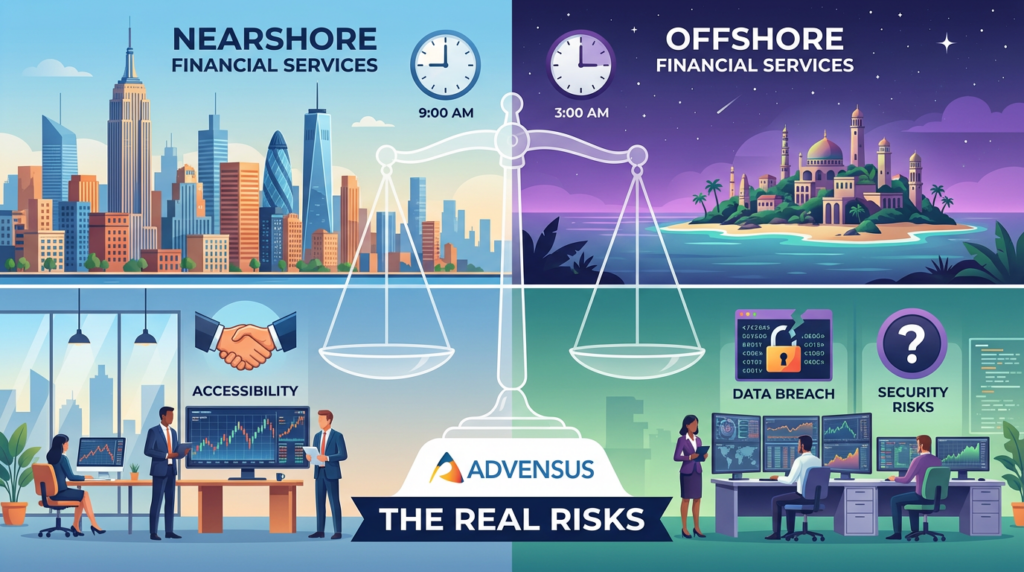
In the spreadsheet view of the world, offshore always wins. Why pay $14/hour in the nearshore when you can pay $9/hour offshore?
But operations don’t happen in spreadsheets. They happen in the real world, where communication friction, time zones, and cultural disconnects compound into millions of dollars in hidden costs.
On paper, this works. In execution, it often doesn’t.
The Real Risks of Legacy Offshore Models
1. Communication Gaps & “Yes” Culture
In many traditional offshore markers, there is a cultural reluctance to deliver bad news. An agent might say “Yes, I understand” when they actually mean “I heard you.” In complex fintech scenarios, this ambiguity is a compliance nightmare. You need agents who are empowered to say, “Wait, that procedure doesn’t apply here.”
2. Time Zone Delays
When your fraud team in New York finds a breach at 2:00 PM EST, your offshore team in Manila is asleep. By the time they log in, the damage is 12 hours deeper. Nearshore teams in the Dominican Republic operate in EST. When you are awake, they are awake. When you slack them, they reply instantly.
3. Compliance Blind Spots
It is exponentially harder to audit a facility on the other side of the world. “Out of sight, out of mind” is a dangerous strategy when you are dealing with federal banking regulations.
The Nearshore Advantage
Nearshore isn’t just “closer.” It’s “aligned.”
- Cultural Affinity: Agents understand the stress of a mortgage application or the nuances of U.S. credit scores because they consume the same media and culture.
- Reduced Friction: Training times are shorter because you don’t have to explain the cultural context of every product feature.
Re-evaluate whether your location strategy supports risk management. If your team is spending more time fixing communication errors than solving customer problems, you aren’t saving money—you’re just deferring cost.
Conclusion
Distance creates friction. In fintech, friction creates risk. Choose a partner that removes both.