
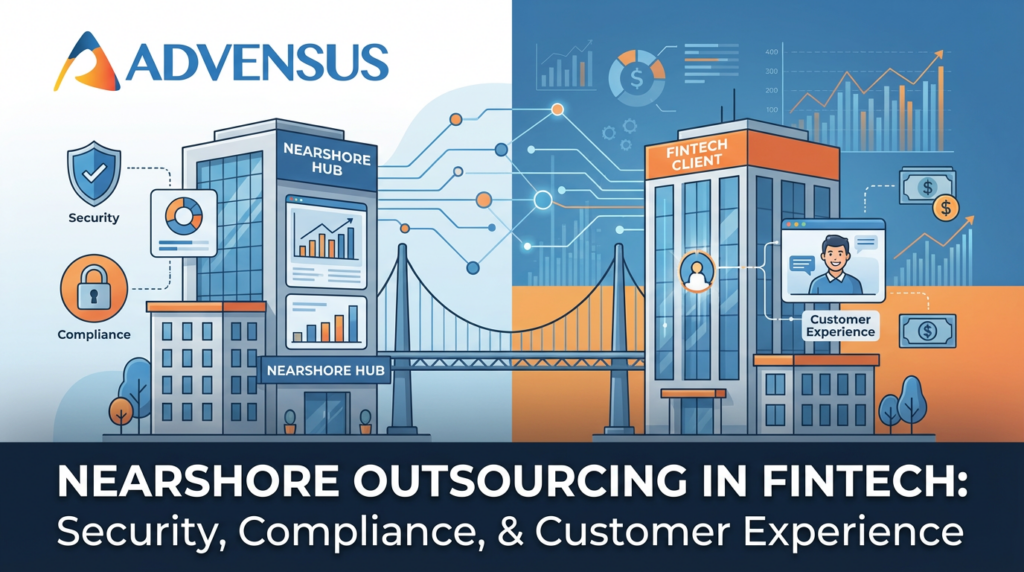
Fintech leaders operate in a pressure cooker that retail and general SaaS companies rarely experience. You are expected to scale user acquisition aggressively, reduce operating costs, and maintain a flawless customer experience—all while navigating a minefield of regulatory requirements.
Most outsourcing models fail here because they treat support as a volume game. In fintech, support is a risk management function.
A single mishandled dispute or a loose compliance protocol doesn’t just lower your CSAT score; it exposes you to regulatory fines, fraud loss, and reputational contagion.
This is where most operations underestimate risk. It’s not just about who answers the phone; it’s about whether that agent understands the compliance framework they are operating within.
Why Fintech Support Is Fundamentally Different
When a retail customer calls support, they are usually frustrated. When a fintech customer calls, they are often anxious. They are calling about their money, their identity, or their financial future.
Unlike generalist support teams, fintech operations must handle:
- Sensitive Data Handling: PII, banking details, and transaction histories.
- High-Stakes Disputes: Chargebacks, fraud alerts, and blocked accounts.
- Delinquency & Collections: Conversations that require empathy and strict adherence to regulations like the FDCPA.
- Regulatory Governance: Every interaction is a potential audit point for PCI-DSS, SOC 2, or KYC/AML compliance.
If your outsourcing partner is training agents on “empathy” but not on “compliance implications,” you have a gap that will eventually become a breach.
This is the point where many teams lose visibility. You need to know that your external partner’s “quality assurance” isn’t just checking for politeness, but for process adherence that protects your license to operate.
The Nearshore Advantage for Fintech
For years, the default choice for cost reduction was offshore markets like the Philippines or India. While effective for unparalleled scale, these markets often introduce friction in complex, high-compliance environments.
Nearshore outsourcing (specifically in the Dominican Republic and Trinidad & Tobago) offers a strategic balance that is increasingly favored by North American fintechs.
1. Cultural & Linguistic Alignment
In complex financial conversations, nuance matters. Nearshore agents in the Caribbean share a strong cultural affinity with the U.S. and often possess B2-C2 English proficiency. They can navigate the subtle difference between “verifying identity” and “interrogating a customer,” which is critical for maintaining trust during security checks.
2. Real-Time Collaboration & Oversight
Time zone alignment (EST/AST) means your risk and compliance teams in the U.S. are working the same hours as your support teams.
- Urgent fraud alerts are handled in real-time, not after a 12-hour delay.
- Compliance audits and “nesting” periods can be supervised directly by your U.S. leadership without overnight travel.
3. Simplified Compliance Governance
Achieving PCI or HIPAA compliance is simpler when your partner’s physical infrastructure and legal frameworks are closer and more accessible. Advensus, for example, operates PCI-certified environments that mirror the rigorous security standards of onshore centers.
Protecting Trust at Scale
Trust is the currency of fintech. If users don’t trust you with their data, they won’t trust you with their money.
On paper, low-cost outsourcing works. In execution, it often erodes trust.
A nearshore partner must operate as an extension of your brand—a “second site” rather than a vendor. This means shared KPIs that go beyond Average Handle Time (AHT).
- First Contact Resolution (FCR) becomes a proxy for trust.
- QA Scores must be weighted heavily on compliance pass/fail rates.
- Agent Retention is critical; you cannot build a compliance culture with a transient workforce.
If this sounds familiar, it’s worth reviewing your current model. Are you trading a 15% lower hourly rate for a 50% higher risk profile?
Conclusion
Scaling your fintech operation doesn’t mean you have to choose between security and cost efficiency. The right nearshore partner provides the physical security, compliance rigor, and talent quality needed to protect your brand while you grow.
Assess whether your support operation can scale without increasing compliance risk.