
Healthcare organizations are operating in a paradox: costs must decrease, yet patient expectations and regulatory scrutiny are at an all-time high.
Customer support and back-office operations—such as Revenue Cycle Management and Claims Processing—are clear candidates for outsourcing. Still, many COOs hesitate.
Why?
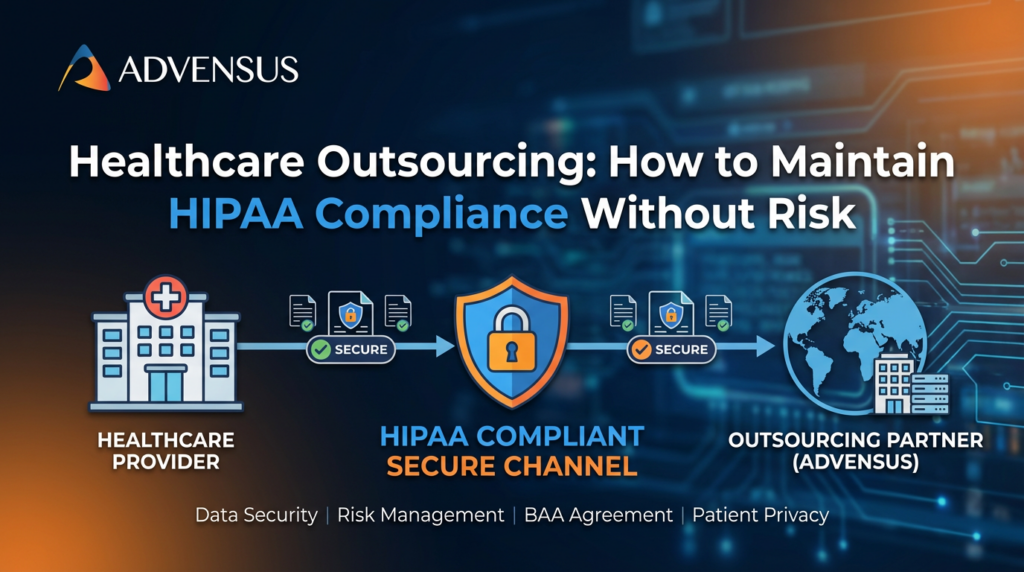
Because in healthcare, a data breach isn’t just a PR issue—it’s a federal violation.
This is where many organizations miscalculate risk. The fear of losing control over Protected Health Information (PHI) leads providers to keep non-core operations in-house—even at significantly higher costs.
Why Healthcare Outsourcing Is Different
Healthcare outsourcing cannot be approached like other industries.
- Protected Health Information (PHI): Every interaction is a potential HIPAA liability.
- High Emotional Sensitivity: Patients are often stressed, confused, or in pain.
- Zero Tolerance: A breach of trust can have lasting consequences.
👉 Compliance and control must always come before speed or cost savings.
How Nearshore Models Reduce Risk
1. Strong Compliance Oversight
- Real-time audits
- Immediate communication
- Same time zone collaboration
2. Controlled Environments
- Paperless floors
- Disabled USB ports
- No cell phones
- Biometric access
Nearshore teams can operate as a compliant extension of your internal operations.
Final Thought
Outsourcing doesn’t increased risk—poorly designed outsourcing does.
Is your model compliant by design—or by luck?